
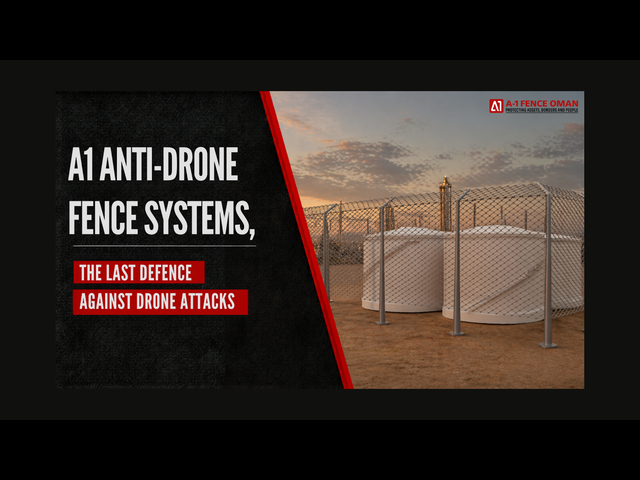
A1 Anti-Drone Fence Systems: The Ultimate Shield Against Drone Attacks
Introduction
Across Oman, critical infrastructure operators are increasingly strengthening perimeter security strategies in response to evolving UAV-related risks. From ports and industrial facilities to energy infrastructure and logistics environments, organizations are focusing on improving infrastructure protection against unauthorized aerial activity and emerging drone security challenges.
As drone technology advances, modern infrastructure protection strategies are becoming more comprehensive. Conventional perimeter systems alone are no longer sufficient for facilities operating in high-security environments where uninterrupted operations and asset protection are essential.
While surveillance platforms, radar technologies, and electronic drone mitigation systems continue supporting threat monitoring and response operations, physical anti-drone barriers are becoming an increasingly important component within modern perimeter protection strategies.
Designed to strengthen infrastructure resilience, physical drone mitigation systems help provide an additional layer of protection when aerial threats approach secured operational zones.
The Role of Physical Anti-Drone Barriers in Modern Security Planning
Modern physical anti-drone fence systems are designed to reinforce perimeter security around critical infrastructure and sensitive operational environments exposed to evolving aerial risks.
Built for modern UAV threat conditions, these perimeter systems are engineered to strengthen infrastructure protection in environments where advanced security measures and reliable perimeter control are critical.
Most modern drone protection technologies are primarily designed for:
- Aerial activity identification
- UAV movement observation
- Electronic interference measures
- Coordinated threat management
Physical drone protection fences provide a different layer of protection by delivering continuous passive perimeter security without depending on electronic interruption systems or response timing.
By helping restrict unauthorized aerial access, these systems support modern infrastructure security strategies designed for high-value operational environments.
Why Infrastructure Operators Are Strengthening UAV Protection Strategies
Drone-related security concerns are influencing how industries across Oman approach modern perimeter protection.
Current UAV capabilities allow drones to:
- Operate close to restricted infrastructure
- Navigate low-altitude environments
- Support payload-based aerial operations
- Conduct aerial surveillance activity
- Access sensitive operational zones
As these risks continue evolving, organizations are expanding their infrastructure security planning to strengthen protection around critical assets and operational facilities.
Sectors strengthening aerial security and perimeter protection strategies include:
- Oil and energy infrastructure
- Maritime and cargo terminals
- Aviation and airport facilities
- Manufacturing and industrial zones
- Utilities and essential services
- Supply chain and logistics operations
- Sensitive government facilities
As infrastructure security requirements continue evolving, organizations are increasingly adopting perimeter protection solutions designed to support operational stability and strengthen facility resilience against aerial security risks.
A1 Anti-Drone Fence for Critical Infrastructure Applications
Built for modern infrastructure protection needs, A1 Anti-Drone Fence helps reinforce perimeter security across operational facilities and security-sensitive environments in Oman.
Engineered as a passive aerial protection system, the solution is designed to reinforce infrastructure security by helping reduce the risk of drone intrusion around sensitive operational environments.
The system is designed to:
- Strengthen restricted infrastructure perimeters
- Help manage unauthorized UAV movement
- Support advanced security frameworks
- Operate as a physical aerial mitigation solution
- Enhance protection around critical operations
- Provide continuous passive defence capability
By adding a physical mitigation layer to perimeter security frameworks, anti-drone fencing systems help support long-term infrastructure protection strategies.
Developed for Operational Reliability and Infrastructure Continuity
Designed for demanding operational environments, A1 Anti-Drone Fence supports long-term perimeter reliability and infrastructure continuity across critical facilities.
Reinforced UAV Protection Mesh
The woven mesh structure is engineered to support drone interception capability while maintaining consistent perimeter coverage around protected facilities.
Structural Support Framework
The reinforced framework is developed to enhance perimeter reliability and maintain fence stability across demanding operational environments.
Drone Impact Management Capability
The system is designed to help control UAV impact forces and strengthen protection around sensitive operational infrastructure.
Environmental Durability Performance
The galvanized surface treatment helps improve corrosion resistance and supports dependable outdoor performance in challenging regional climate conditions.
Integrated Grounding and Safety Support
The fence system incorporates grounding support designed to enhance operational safety and overall perimeter system performance.
Engineered for UAV Mitigation Applications
The system is engineered and validated for demanding drone-related operational scenarios to support reliable perimeter protection performance.
Infrastructure Sectors Where Physical Drone Protection Matters
Across critical industries, physical anti-drone barriers are becoming an important part of modern infrastructure protection strategies focused on maintaining secure and resilient operational environments.
Typical deployment environments include:
- Energy and petroleum facilities
- Fuel storage and processing infrastructure
- Seaport and coastal operations
- Aviation infrastructure
- Power and utility networks
- Industrial manufacturing environments
- Administrative and government facilities
- Security-sensitive operational sites
Across these environments, enhanced perimeter defence helps improve infrastructure security by reducing exposure to unauthorized drone movement and operational security risks.
Why Passive Perimeter Mitigation Is Becoming More Important
Electronic drone detection technologies continue playing an important role in modern security operations. Monitoring systems and counter-drone technologies help identify aerial threats and support response coordination.
At the same time, physical perimeter barriers add a constant layer of infrastructure protection designed to function independently of active electronic response systems.
Key benefits of physical drone mitigation barriers include
- Continuous perimeter coverage
- Immediate physical interception capability
- Reduced dependency on response timelines
- Improved operational resilience
- Additional infrastructure protection support
Designed for uninterrupted perimeter support, passive mitigation barriers remain continuously operational to strengthen long-term infrastructure protection without relying on active electronic response systems.
The Shift Toward Integrated Infrastructure Security
Across Oman, infrastructure operators are increasingly adopting multi-layered security approaches developed to strengthen protection against evolving UAV-related risks.
Current drone defence approaches are combining:
- UAV monitoring technologies
- Radar-based surveillance systems
- Electronic mitigation platforms
- Physical perimeter protection systems
This multi-layered approach helps improve infrastructure security by supporting both aerial threat response and long-term perimeter resilience around sensitive operational environments.
As infrastructure operators continue prioritizing operational continuity and risk reduction, physical anti-drone fence systems are becoming an increasingly important part of future-ready security planning.
Conclusion
The increasing use of UAV technology is reshaping perimeter security requirements across industrial and critical infrastructure sectors in Oman.
From ports and logistics environments to energy facilities and operational infrastructure, organizations are strengthening security strategies to improve protection against evolving aerial threats and unauthorized drone activity.
While electronic monitoring systems and drone mitigation technologies continue supporting modern security operations, physical anti-drone barriers provide an additional layer of protection designed to strengthen perimeter resilience around sensitive infrastructure.
Developed for critical operational environments, A1 Anti-Drone Fence delivers reliable physical drone mitigation support for modern infrastructure protection requirements.
Contact A1 Fence Oman
Strengthen perimeter security with advanced physical drone mitigation solutions designed for critical infrastructure environments.
Phone: +968 94174548
Email: sales@a1fence.om
Website: A1 Fence Oman